Saturday, 20 August 2011

An evening at Sissinghurst


‘Gallivanting’ is truth be told, the only way to describe my recent escapades in the South East! Not only did I drink in the great beauty of Great Dixter all day, but the evenings were peppered with glorious sunsets, moth trapping, street festivals in Hastings (including the Dixter veg stall!) and a delightful evening stroll around the resplendent gardens of Sissinghurst Castle! I journeyed here for the first time back in April for what turned out to be a golden week of spring glory, and it was a great joy to return here and poke about the place during the summer displays. As back in April, the Cottage Garden was for me the most beautiful area of Sissinghurst. The simple design of this garden, with the majority of the available space handed over to borders, combined against the backdrop of that beautiful brick cottage clad in a fine specimen of Rosa, is truly breathtaking. The planting here is packed tight, ranging from clumps of Achillea to delicate bedding out with Hibiscus trionum. The ‘hot’ planting scheme seems to compliment and be enhanced by the brick, and obviously shows up well against the Yew topiary! The copper tub that serves as a centrepiece is beauty itself. Living here in the manor at Hidcote is great fun, but I would certainly consider giving it up to live in that cottage, there is even a hive of wild bees living in the roof; perfect!

View from underneath the tower

Yew Walk

The tower seen from the recently mowed meadow

Dovecote in the meadow

Lime Walk

Cottage Garden shadows

Exquisite planting in the Cottage Garden


Hydrangea serrata ‘Preziosa’

 
Flowering now in the Old Garden. This chap is splendid; dark stems and foliage plus flowers that intensify in colour as they age!

Monday, 15 August 2011

Plants at Dixter

As I have attempted to hint at in the two previous posts, the garden at Great Dixter was full of wonderful plants! Below is a selection from those that offered the most enjoyment, although it was jolly difficult to choose!
This is the last of the Dixter reports; I have to move on with my life.

Tagetes ‘Cinnabar’, Christopher Lloyd selected this over several years by growing long rows of them and saving seed from the tallest plant each year

This is one of my favourite plants, Salvia confertiflora. These are second year plants taken from cuttings last September, huge impressive things can be grown by digging the plant up before the frosts and overwintering them in the greenhouse. That third year display is magnificent!

Cosmos bipinnatus ‘Rubenza’ & Ageratum houstonianum ‘Red Sea’

One of East Sussex’s finest getting stuck in to Amberboa muricata

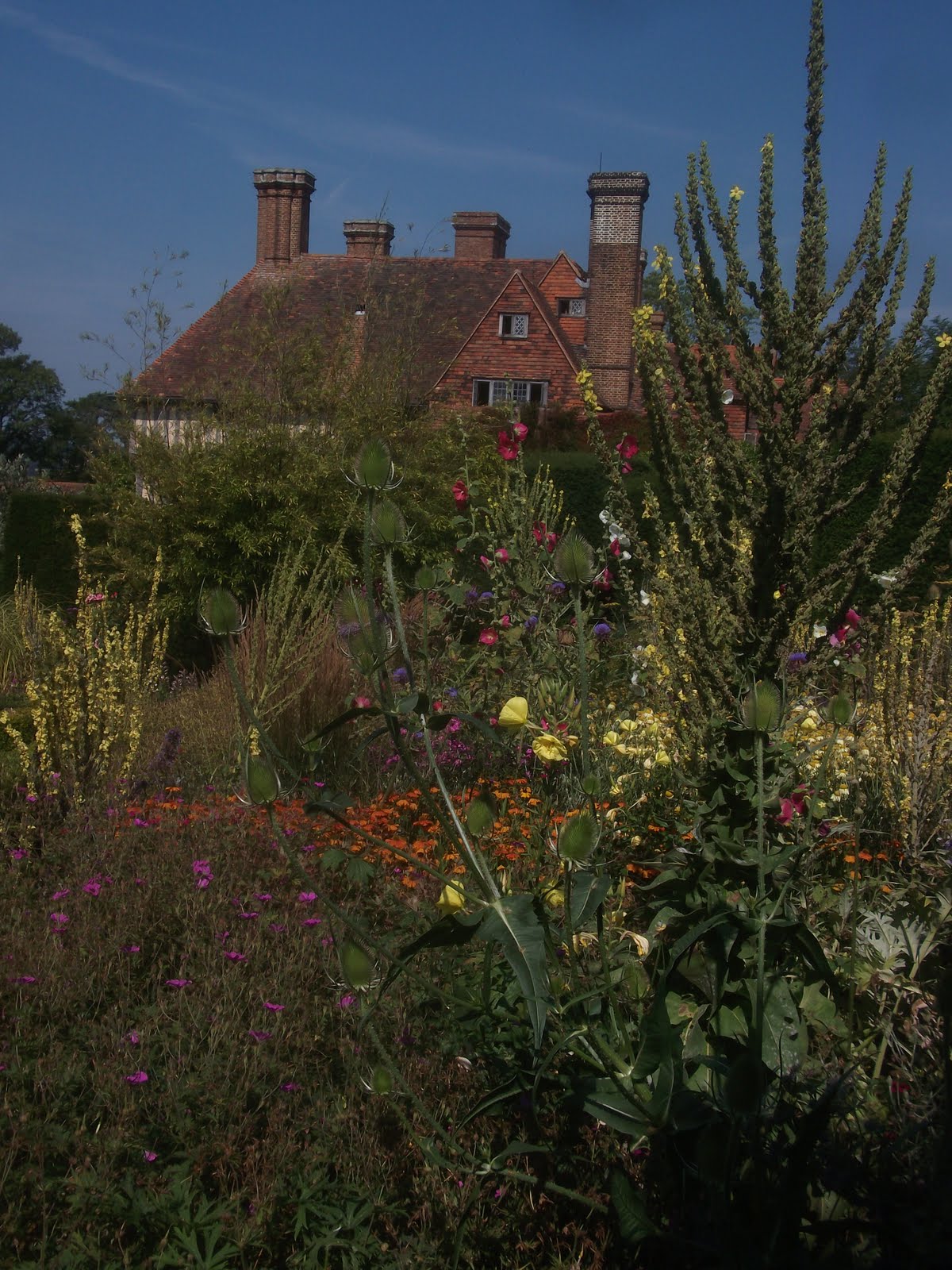
Dipsacus fullonum, Teasel. Cracks in the path, it’s all over the bally place! A wonderful plant

Clematis viticella ‘Alba Luxurians’, I just read an article suggesting if you only have space for one Clematis then this is it! Strong stuff but it was certainly a joy to discover

Eucryphia x nymansensis 'Nymansay', this is a huge tree that was smothered in these delightfully scented blooms

A gem spotted in the plant sale area

£4? Investment

Sunday, 14 August 2011

Plantings at Dixter


I’m grateful to have to gone here directly after the placement at Wollerton, where the planting was also magnificent but in a quite different way. The Herbaceous Border at Wollerton is one of the most beautiful things I’ve ever seen; breathtaking colours in complete harmony, with a perfect transition of colour along the border in the classic Jekyll style. The atmosphere there was a lot more controlled, or at least ‘designed’ and orderly. The perfection though was its beauty, and this would have been greatly diminished by scores of blasted Teasels self-seeding themselves all about the place! Cut to Great Dixter, where the beauty of the place is its carefree romance, and apparent wildness, where self-seeders running riot looks utterly correct & proper.

The way we thread groups into and through one another so that the plants appear to have put their own ideas into the weaving of an overall tapestry, makes its strongest contribution to the cottage garden element.”

This quote from Christopher Lloyd hints at what I witnessed during last week. That classic idea of cottage garden informality, with flowers and herbs crammed into the borders side by side, gets close to the nub of the success of Dixter. Plants are planted dangerously close together, and the sheer volume of plants leads to rather complex arrangements! That said, the bare bones of a scheme can actually be pretty basic, i.e. several groups of adjacent perennials, but the magic comes from the presentation and what is weaved over the top. The likes of Verbena bonariensis are overlaid on a scheme, which have huge impact but require little planting space. Species with a branching habit such as Cornflower, or gauzy foliage such as Bronze Fennel, are also quite practical planting options, as quite simply they allow you to see through them. It would be pointless packing in all these delightful specimens if one couldn’t see past the first drift! These ideas are then repeated throughout the season with successional planting, an area often changing three times with a different plant or combination. This approach to planting, over a long season and with old-fashioned plants, ultimately leads to scenes of more bees and hoverflies than you might think possible to see in one place, and for me that is the greatest joy!

Long Border with Tagetes ‘Cinnabar’ in the foreground

Pink Phlox into white Phlox and blue Eryngium

Salvia, Helenium, the daisy heads of Erigeron annuus (a misleadingly named perennial) and Phlox. The flecks of blue are provided by Salvia uliginosa

Minimal path space in the High Garden, Fuchsia, Hemerocallis, Phlox; all sorts crowding out the path

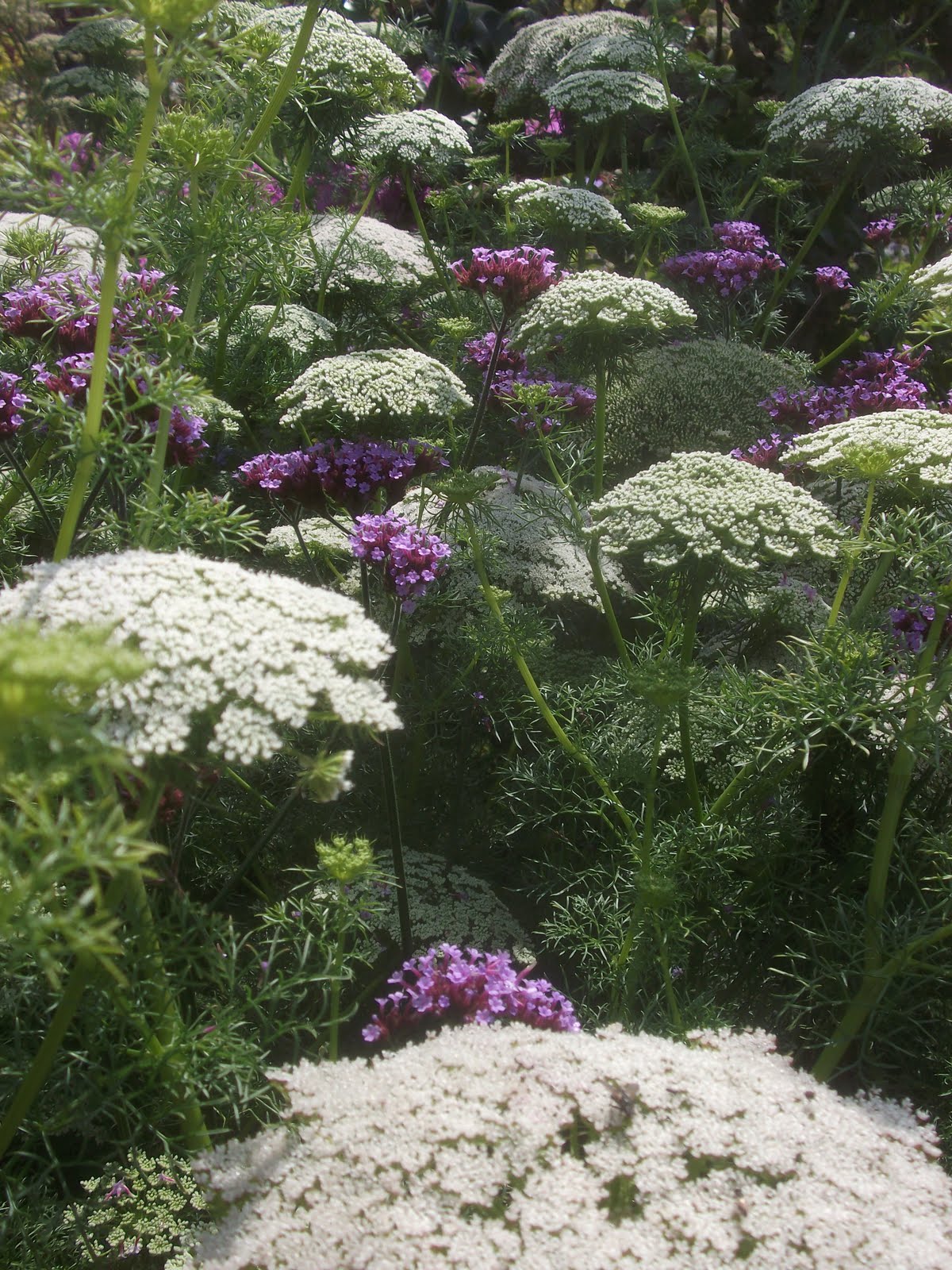
This is perhaps the best thing I saw here, wonderful sprays of Ammi visnaga being delicately interspersed with Verbena bonariensis. V. bon features all over the garden, phenomenal plant

Quite probably the second best; the slashes of Acanthus down at the front are inspired

All-sorts; Lychnis, Bronze Fennel, Nasturtium, Cotinus, Dill and so on and so forth

Jungle vibes in the Exotic Garden, the huge leaves of Tetrapanax papyrifer in the foreground

Thursday, 11 August 2011

Great Dixter placement


Last week, I completed a placement at the magnificent Great Dixter in Northiam, East Susex. This is my last placement of the summer, and what a week to end on! The garden at Dixter seems to hum with glory, it is quite frankly splendid and a great joy to explore! A massive array of outstanding specimens are on display, planted in the most delightfully wild and carefree manner. It seems as if nature has taken over and run amok! Of course, it hasn’t; the entire place is meticulously managed, weeded and staked, but the complexity of the combinations evoke more a native meadow than herbaceous border. Common wildflowers mingle with exotic, tender cultivars, height and form is muddled, and the Jeykll colour wheel suddenly seems to be an irrelevant contrivance.
When a plant self-seeds itself and is allowed to grow, so often it somehow seems to just ‘look right’. This seems to explain how the planting works at Dixter, where they have become experts at utilising plants in a natural way. This naturalism influences the whole garden; the borders are planted up right to the path, so as the plants grow they froth onto the pathway, forcing the visitor to brush past and disturb countless bees & butterflies along the way. Elsewhere all the roses and dahlias are single-flowered, the less-cultivated forms harmonising with the overall wild feel. Very little bare earth is on show, with borders packed so tight it’s a wonder anything can actually grow!
Great Dixter and Sissinghurst are within 20 minutes drive of each other, please, by Jove, you must head south and make a day of it!

Manor entrance with pot displays. Students are rallied at 5am by head gardener Fergus to piece these together every two weeks

View of manor from the Sunken Garden, which ended up quite literally sunken after incessant downpours on Thursday

Long Border view, the herb Dill can be seen in the foreground and throughout the garden. Plants with ‘see-through’ foliage are often used, lending themselves to the crammed planting

Some high notes at the top of the Long Border

Stock bed (any plant here liable to be dug up and used elsewhere to plug a gap) littered with the imposing Verbascum olympicum which self-seeds about the place like billy-o

High Garden, formal topiary smeared with informal planting

Harmony with bold colours in the High Garden

The Meadow, complete with ye olde topiary

Nanook, known locally as ‘the entrance cat’ due to his cheerful dominance of this slab seat at the garden gate. A genuine good egg

Meadow panorama, fascinating combination of styles


As an aside, the hour-long Hidcote BBC4 documentary is available once more on the iPlayer after a second broadcast last weekend. Once again it appears unavailable outside of the UK (what are these asses playing at).
Related Posts Plugin for WordPress, Blogger...